Tell us about the job
Takes about a minute. No obligation.
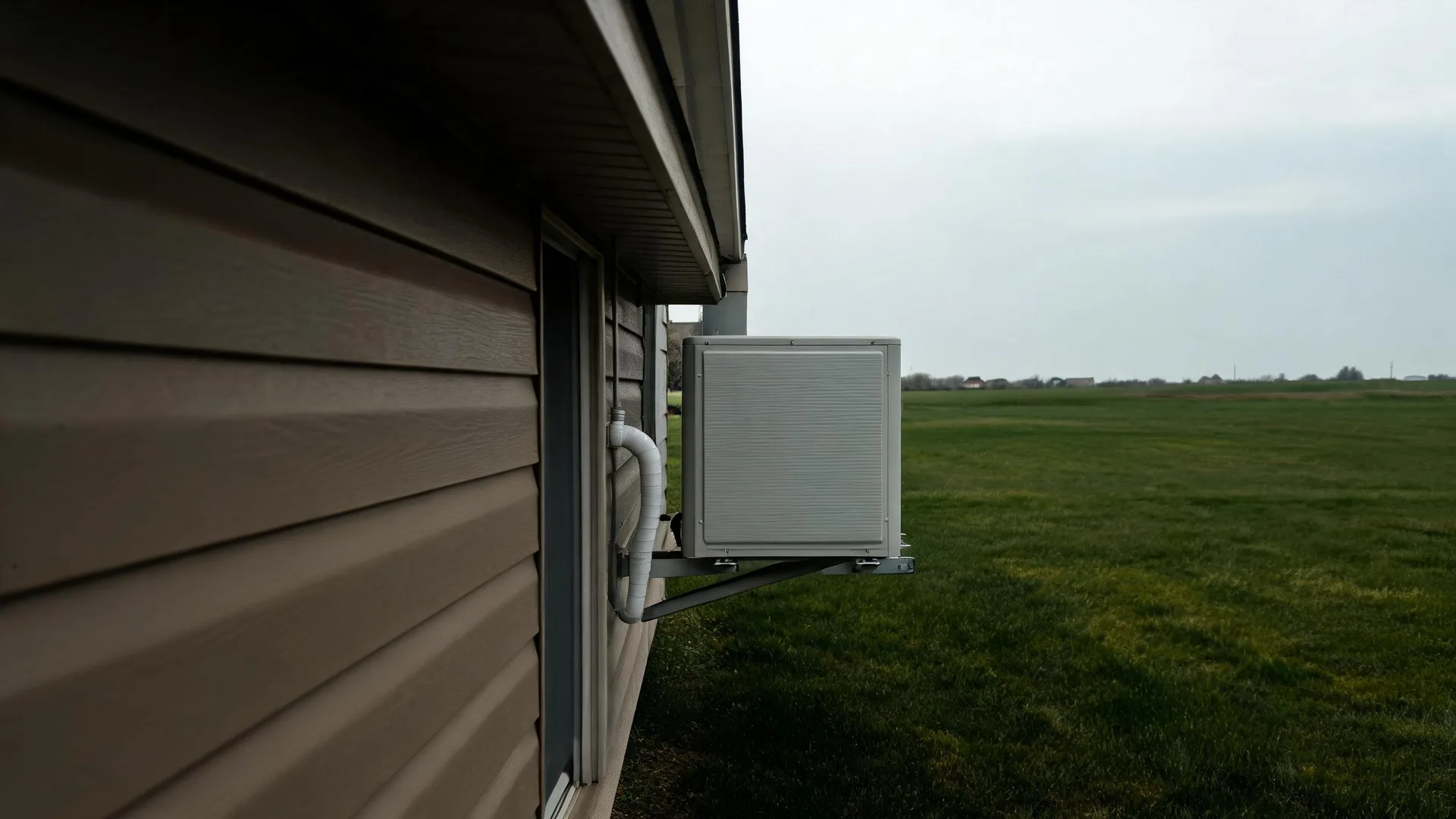
A contractor quoting a mini-split repair in Rush County has to do more than confirm which component failed. 91 severe weather events were recorded in Rush County, Indiana between 2015 and 2024. At that rate, the outdoor unit has been cycling through pressure swings and thermal stress with regularity, and wear on the condenser coil or fan motor can look a lot like simple age. The repair scope turns on which it actually is, because a failed part that traces back to sustained weather load often points toward a second failure waiting nearby.
A mini-split that stops cooling or heating in a house this old carries a repair history the opened unit has to explain. Half the homes in Rush County, Indiana were built in 1954 or earlier (2020-2024 ACS 5-year). Equipment fitted into housing that old often went in against existing conditions the installer had to work around, and stress from a marginal mount or an undersized electrical run shows up eventually in the compressor, the control board, or the refrigerant circuit. A contractor who finds a failed part here checks what that part was working against before ordering a replacement.
The Parts of a Mini-split a Contractor Checks During a Repair

The indoor air handler mounts high on a wall inside the room and is the piece a homeowner notices first. It pulls room air across a coil and pushes conditioned air back out. When this unit is the problem, the signs show up as weak airflow, ice on the coil, or air that never reaches the set temperature.
The outdoor condenser unit sits on a pad or bracket outside the house and holds the compressor, the condenser coil, and the fan that sheds heat to the open air. A refrigerant line set and a condensate drain run between the two units, and the contractor traces both when the fault is not obvious inside or outside alone.
The drawing shows the general layout of a mini-split system, and a licensed contractor determines which components and conditions apply to your specific home.
Find a contractor in Rush CountyRush County, Indiana, by the numbers
91 severe weather events were recorded in Rush County, Indiana between 2015 and 2024.
NOAA National Centers for Environmental Information, Storm Events Database, bulk CSV export, events 2015-01-01 through 2024-12-31.Half the homes in Rush County, Indiana were built in 1954 or earlier (2020-2024 ACS 5-year).
U.S. Census Bureau, 2020-2024 American Community Survey 5-Year EstimatesRush County, Indiana holds 7,387 housing units (2020-2024 ACS 5-year).
U.S. Census Bureau, 2020-2024 American Community Survey 5-Year EstimatesOwners occupy 74.9% of the occupied homes in Rush County, Indiana (2020-2024 ACS 5-year).
U.S. Census Bureau, 2020-2024 American Community Survey 5-Year EstimatesSevere Weather Events in Rush County
Rush County's climate puts real stress on heating and cooling equipment over time. How often that stress hits shapes how hard a mini-split has to work and how soon repair needs show up.
91 severe weather events, 2015–2024. Source: NOAA National Centers for Environmental Information, Storm Events Database.