Tell us about the job
Takes about a minute. No obligation.
Sizing a mini-split in Union County starts with what the climate actually asks of the equipment, and the answer here is measured rather than relentless. 32 severe weather events were recorded in Union County, Indiana between 2015 and 2024. At that rate, severe weather is a real but infrequent variable in a system's working life, which means a contractor quoting a new install is not building around a punishing weather load. What they are building around is the structure of the house, the layout of the rooms, and whether the refrigerant lines and mounting positions are done in a way that holds up over years of ordinary heating and cooling cycles.
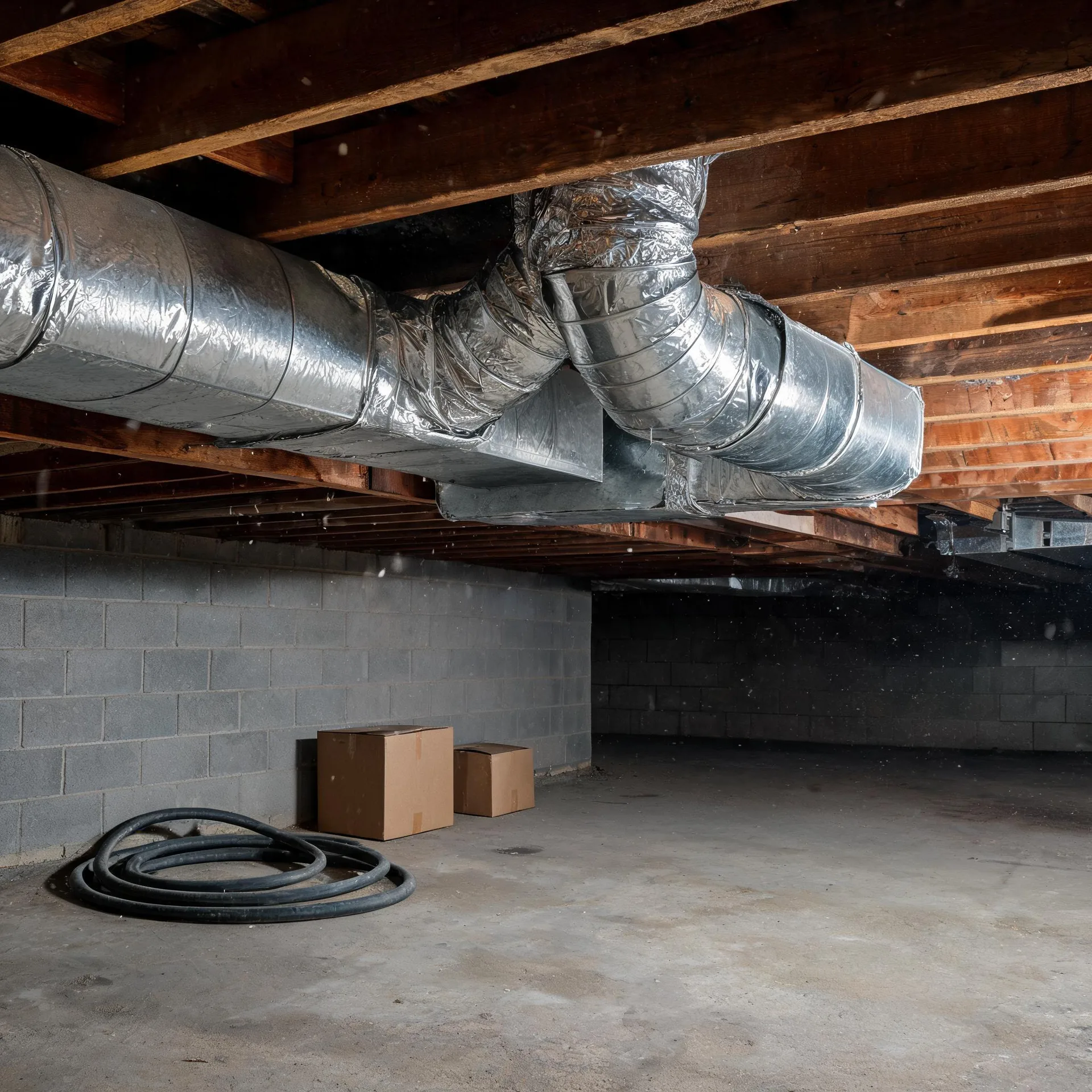
The electrical panel is where a mini-split installation in Union County most often runs into its first real obstacle. Half the homes in Union County, Indiana were built in 1970 or earlier (2020-2024 ACS 5-year). Houses of that vintage were wired for what households used then, and a mini-split's draw can exceed what that original service was sized to handle. A contractor will open the panel before any other price is set, because the unit itself is straightforward to place while the electrical situation underneath it is not something a spec sheet predicts.
The Parts of a Mini-split System and What Gets Installed
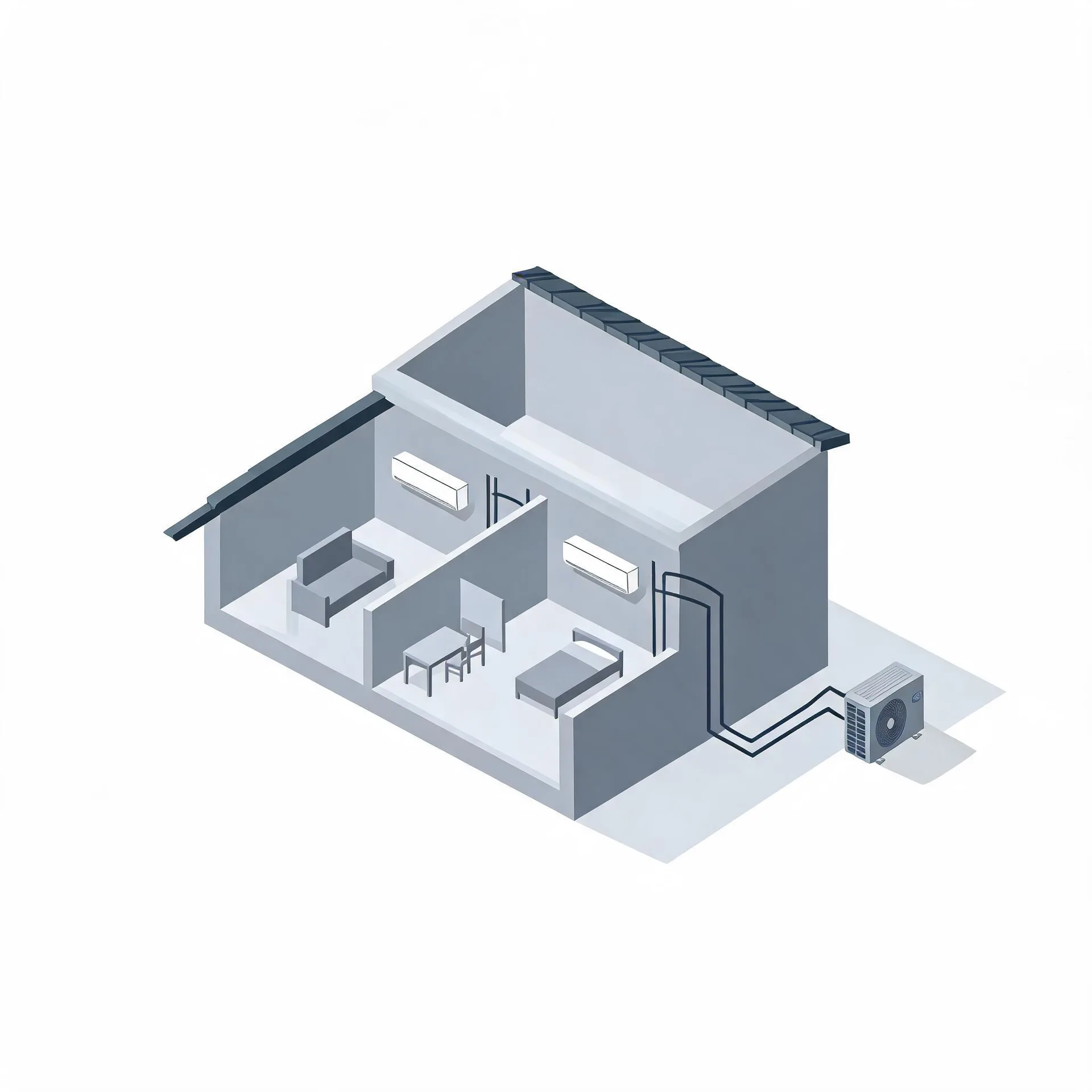
The indoor air handler mounts high on a wall inside the room being conditioned, and it is the piece a homeowner sees every day. The outdoor condenser unit sits on a pad or bracket outside the house and holds the compressor and fan that drive the whole system.
A refrigerant line set runs between the two units through a small opening in the wall, carrying the refrigerant that lets the indoor and outdoor sides work together. A condensate drain line runs from the indoor unit to the outside, and a dedicated electrical circuit feeds the outdoor unit directly.
The drawing shows a general layout of these components, and a licensed contractor determines exactly how each one is positioned and run in your specific home.
Find a contractor in Union CountyUnion County by the numbers
32 severe weather events were recorded in Union County, Indiana between 2015 and 2024.
NOAA National Centers for Environmental Information, Storm Events Database, bulk CSV export, events 2015-01-01 through 2024-12-31.Half the homes in Union County, Indiana were built in 1970 or earlier (2020-2024 ACS 5-year).
U.S. Census Bureau, 2020-2024 American Community Survey 5-Year EstimatesUnion County, Indiana holds 3,255 housing units (2020-2024 ACS 5-year).
U.S. Census Bureau, 2020-2024 American Community Survey 5-Year EstimatesOwners occupy 79.8% of the occupied homes in Union County, Indiana (2020-2024 ACS 5-year).
U.S. Census Bureau, 2020-2024 American Community Survey 5-Year EstimatesSevere Weather Events in Union County
Local weather puts real demand on heating and cooling equipment, and that demand shapes what a system needs to handle year after year. A mini-split sized and installed for what Union County actually sees will run differently than one specified for somewhere else.
32 severe weather events, 2015–2024. Source: NOAA National Centers for Environmental Information, Storm Events Database.