Tell us about the job
Takes about a minute. No obligation.
Sizing a mini-split for a Wayne County home is a local question, not a lookup. 94 severe weather events were recorded in Wayne County, Indiana between 2015 and 2024. At that rate, severe weather is part of the background here, neither rare enough to ignore nor punishing enough to drive the whole conversation. What that means for installation is that a contractor still has to measure the house carefully, account for insulation, orientation, and room layout, and match equipment capacity to actual demand. The weather does not do that work for them.
Older electrical panels are the variable that decides how a mini-split installation goes in Wayne County. Half the homes in Wayne County, Indiana were built in 1960 or earlier (2020-2024 ACS 5-year). Wiring and service panels put in for the appliances of that era were not sized with today's mini-split loads in mind. A contractor will open the panel before anything else, because what they find there tells them whether the existing service can carry the new unit or whether the electrical work becomes a job of its own.
The Parts of a Mini-Split System and What Gets Installed
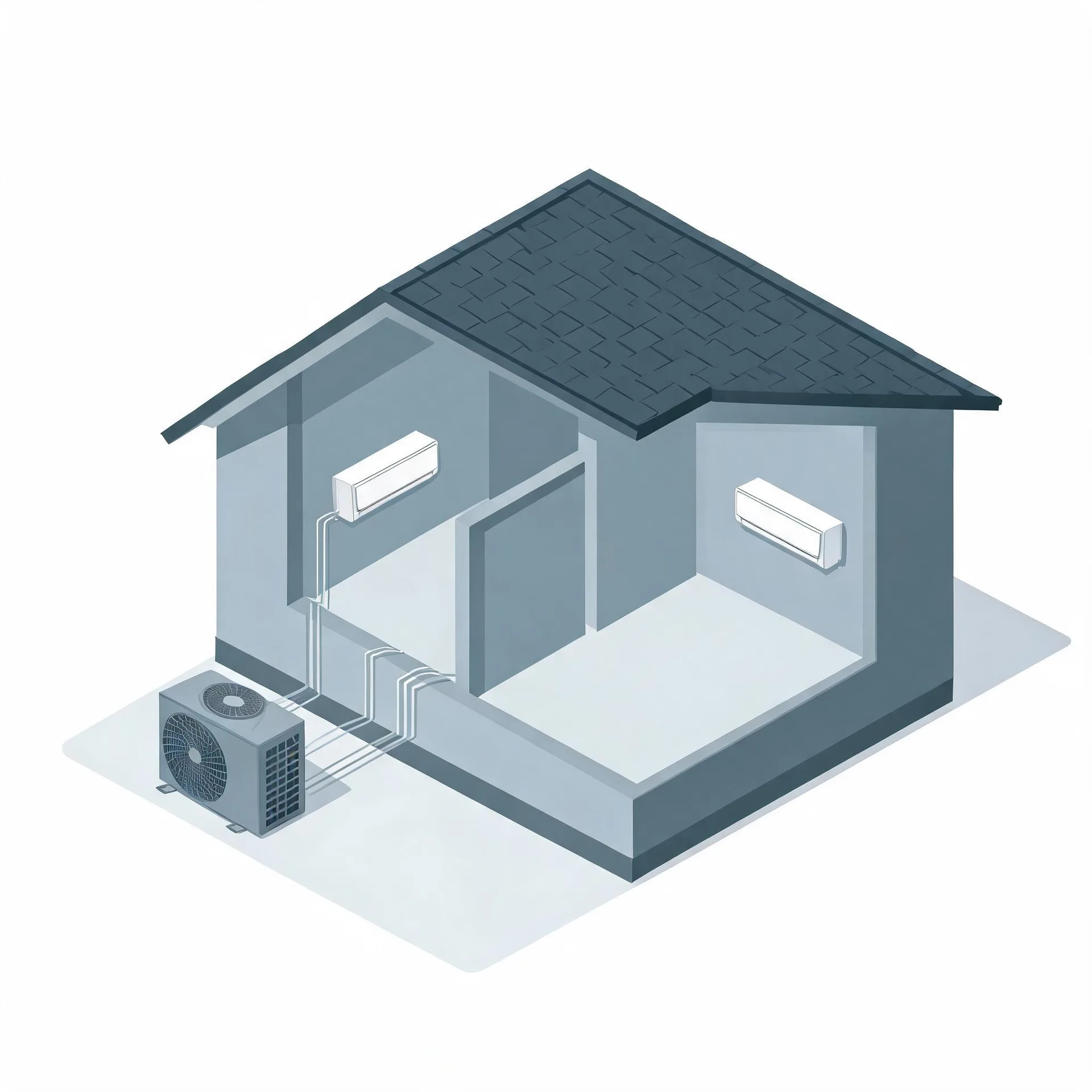
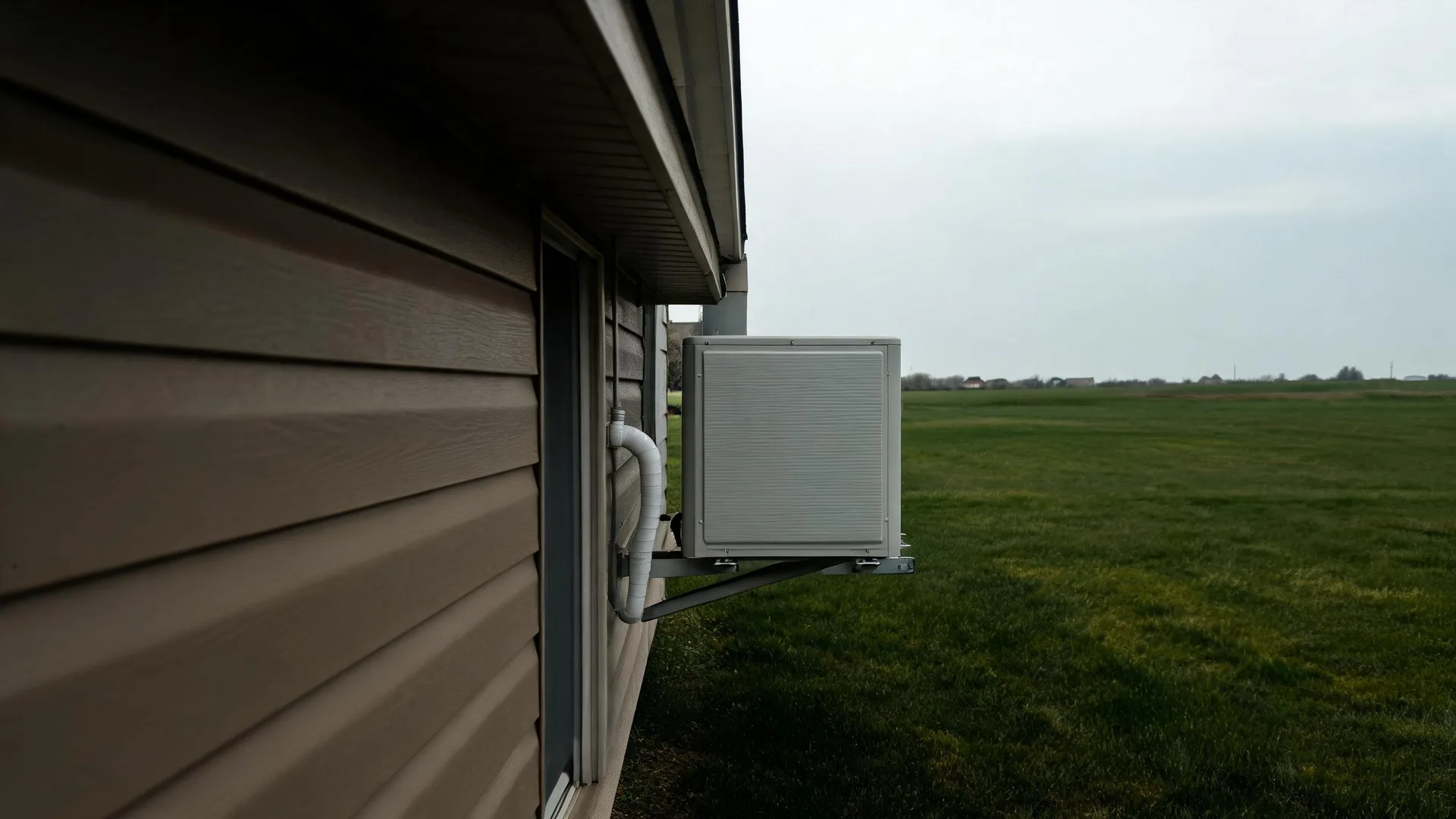
The indoor air handler mounts on an interior wall, high up where it can move conditioned air across the room. The outdoor condenser unit sits outside the house, usually on a pad or bracket at ground level or on a wall, and houses the compressor and the components that drive the whole system.
A set of refrigerant lines runs through a small hole in the wall to connect the two units, and a condensate drain line carries moisture from the indoor handler to the outside. A dedicated electrical line feeds the outdoor unit, and a control wire runs between the two units to carry signals back and forth.
The drawing shows a typical layout, and a licensed contractor determines exactly how each piece is positioned and routed for your specific home.
Find a contractor in Wayne CountyWayne County, Indiana, by the numbers
94 severe weather events were recorded in Wayne County, Indiana between 2015 and 2024.
NOAA National Centers for Environmental Information, Storm Events Database, bulk CSV export, events 2015-01-01 through 2024-12-31.Half the homes in Wayne County, Indiana were built in 1960 or earlier (2020-2024 ACS 5-year).
U.S. Census Bureau, 2020-2024 American Community Survey 5-Year EstimatesWayne County, Indiana holds 30,736 housing units (2020-2024 ACS 5-year).
U.S. Census Bureau, 2020-2024 American Community Survey 5-Year EstimatesOwners occupy 69.2% of the occupied homes in Wayne County, Indiana (2020-2024 ACS 5-year).
U.S. Census Bureau, 2020-2024 American Community Survey 5-Year EstimatesSevere Weather Events in Wayne County
Heating and cooling loads in Wayne County are shaped by the weather the area actually sees, not regional averages. A mini-split sized and installed for local conditions handles demand more reliably than one spec'd without it.
94 severe weather events, 2015–2024. Source: NOAA National Centers for Environmental Information, Storm Events Database.