Tell us about the job
Takes about a minute. No obligation.
A contractor quoting a mini-split installation in Randolph County is not working in a place where weather dominates every sizing decision. 54 severe weather events were recorded in Randolph County, Indiana between 2015 and 2024. At that rate, severe weather is an occasional fact of life here, not a standing pressure on equipment. What shapes the install are things the contractor finds on-site: the age and layout of the house, how well the space holds conditioned air, and where the head units can be placed to cover it evenly. A system put in poorly will underperform regardless of what the sky does.
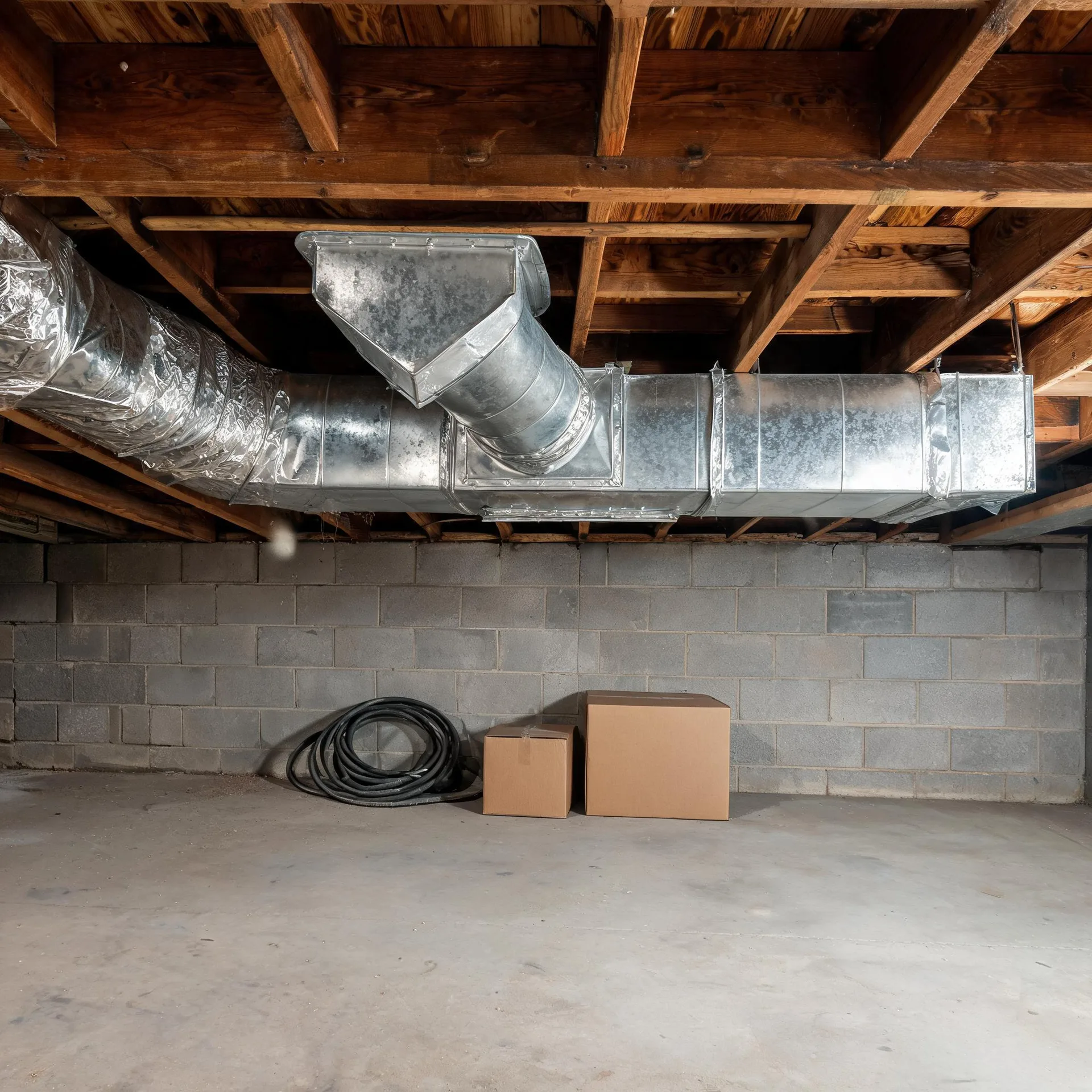
Older electrical panels were sized for what people ran at the time, and a mini-split draws differently from anything that came before it in houses of this vintage. Half the homes in Randolph County, Indiana were built in 1958 or earlier (2020-2024 ACS 5-year). A contractor quoting an installation here opens the panel before pricing the equipment, because what the panel can carry decides whether the job is a straightforward mount or a service upgrade first.
The Parts of a Mini-Split System and What Gets Installed
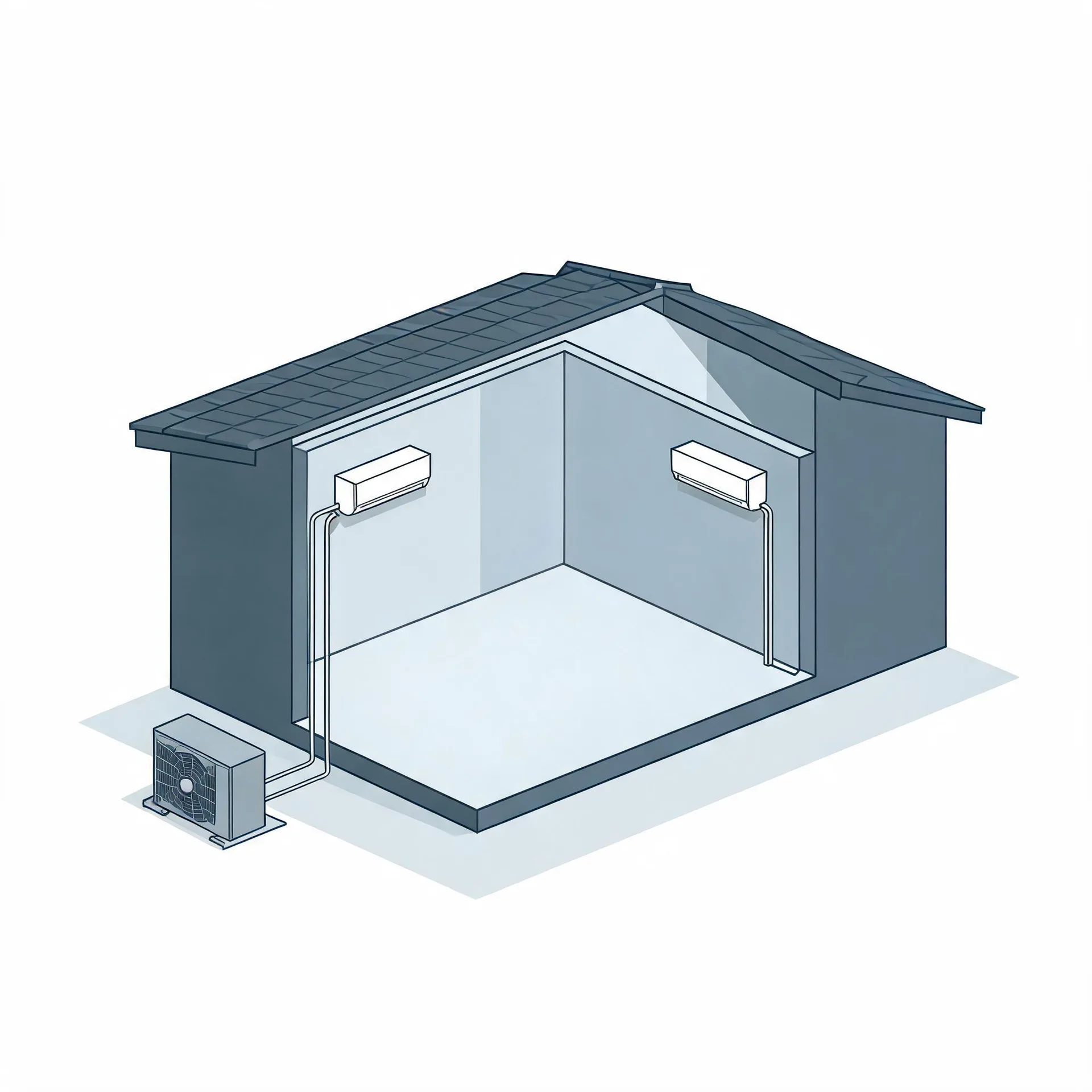
The indoor air handler mounts high on a wall inside the room and delivers conditioned air directly into that space. The outdoor condenser unit sits on a pad or bracket outside the house and houses the compressor and the coil that handles heat exchange with the outside air.
A set of refrigerant lines runs through a small opening in the wall to connect the two units, and a condensate drain line carries moisture away from the indoor handler. The wiring that ties the system together and the small control board that lets you adjust each zone run alongside those lines.
The drawing shows a typical layout, and a licensed contractor determines exactly how each component is positioned and routed for your specific home.
Find a contractor in Randolph CountyRandolph County, by the numbers
54 severe weather events were recorded in Randolph County, Indiana between 2015 and 2024.
NOAA National Centers for Environmental Information, Storm Events Database, bulk CSV export, events 2015-01-01 through 2024-12-31.Half the homes in Randolph County, Indiana were built in 1958 or earlier (2020-2024 ACS 5-year).
U.S. Census Bureau, 2020-2024 American Community Survey 5-Year EstimatesRandolph County, Indiana holds 11,412 housing units (2020-2024 ACS 5-year).
U.S. Census Bureau, 2020-2024 American Community Survey 5-Year EstimatesOwners occupy 77.3% of the occupied homes in Randolph County, Indiana (2020-2024 ACS 5-year).
U.S. Census Bureau, 2020-2024 American Community Survey 5-Year EstimatesSevere Weather Events in Randolph County
Randolph County's climate puts real demands on heating and cooling equipment, and those demands show up in the local weather record. A mini-split sized and installed for this area has to hold up through what this county actually delivers, which is why local conditions belong in any honest conversation about equipment.
54 severe weather events, 2015–2024. Source: NOAA National Centers for Environmental Information, Storm Events Database.